Graphic Facilitation

Graphic Facilitation (or Visual Facilitation) is an accompanying method that utilizes visual objects and images. It goes beyond just recording information. Images are used strategically used to support the process of group work, brainstorming, or decision-making. This is often done in close collaboration with a workshop facilitator.

Interaction Graphic Facilitation Objects Ideas Participant Journey Graphic Recording studio animanova

Facilitation & Design of Group Work

Facilitation refers primarily to the process of leading, guiding or supporting group activities, discussions or workshops in order to achieve specific goals. A clear structure is needed to ensure that time is used effectively and goals are achieved. The facilitator helps to design the agenda and the course of the event in advance. Together with the organiser, a plan is developed for the duration of the conference, during which participants can work collaboratively to define and experience goals. This plan or concept is referred to as a workshop design, which requires a variety of aspects to be taken into account.

During the event, the facilitator dynamically guides the group and ensures that they can work together effectively. They support communication, explain and ensure that all voices are heard. They ensure that discussions remain focused and productive by guiding conversations and ensuring that relevant topics are addressed. When conflicts arise, they assist in conflict resolution and create an atmosphere in which different opinions are respected. Facilitation can thus enable efficient and interactive group activities in which participants share their knowledge, develop ideas and jointly arrive at decisions that are sustainable.

Graphic Facilitation in Group Processes

Visual facilitation uses images or visually designed objects in a targeted manner to support group work, brainstorming or decision-making processes. Visual techniques can be used to structure ideas, explain connections and promote creative thinking and group interaction.

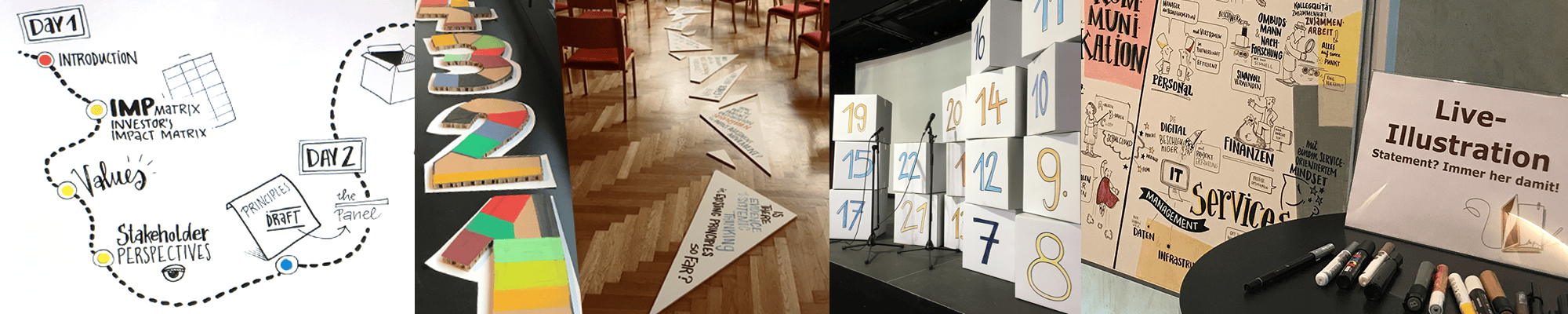
One example is a visualisation of the event schedule, the participant journey. It shows the most important stages in chronological order. This allows participants to see what is planned (and when breaks will be taken).
Specially designed signs help participants find their way around. They define and decorate the room individually. I often work with a key visual that visualises the theme or motto of the event and is used repeatedly. This can be used on working materials or on a graphic recording or knowledge wall.

Furthermore, objects can be prepared and designed that are handed over to the participants for further interactive design. There are many ways to set accents and thereby activate the participants. This visual support helps participants to get more involved, understand complex topics more quickly and develop effective solutions together.

Interaction Graphic Facilitation Graphic Recording studio animanova

Interactive Graphic Recording

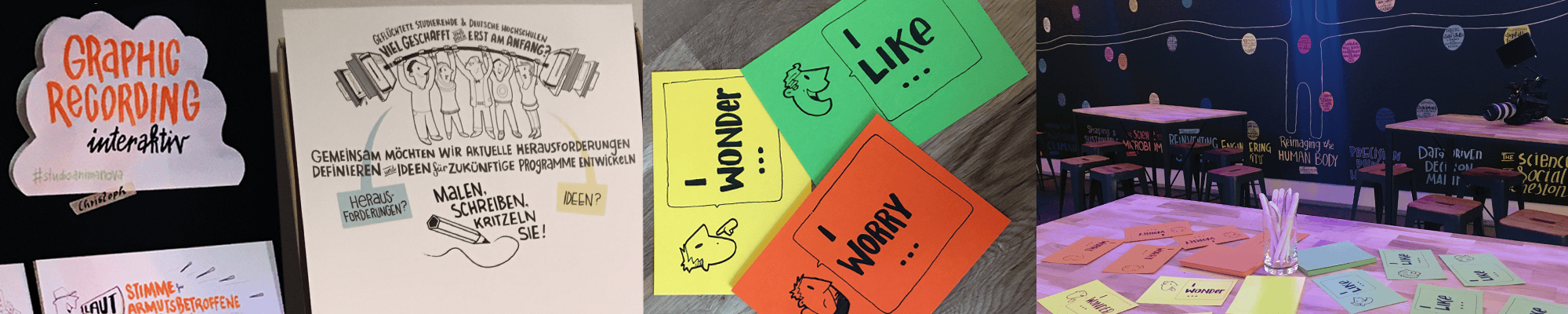
Another form of Graphic Facilitation involves direct interaction with participants through question-and-answer sessions. In this approach, I collaborate with the organizer in advance to develop one or more questions that participants can actively answer during the conference or workshop. This can be done simply on a Post-it note or through pre-designed postcards that include the question and a small set of instructions. The Graphic Facilitator collects all the responses and translates them into small visual scenes in real-time at the event. People are more inclined to actively engage when they see their contributions being represented directly, and they appreciate the visual aspect of it.

Graphic Facilitation, Knowledge Wall, and Graphic Recording

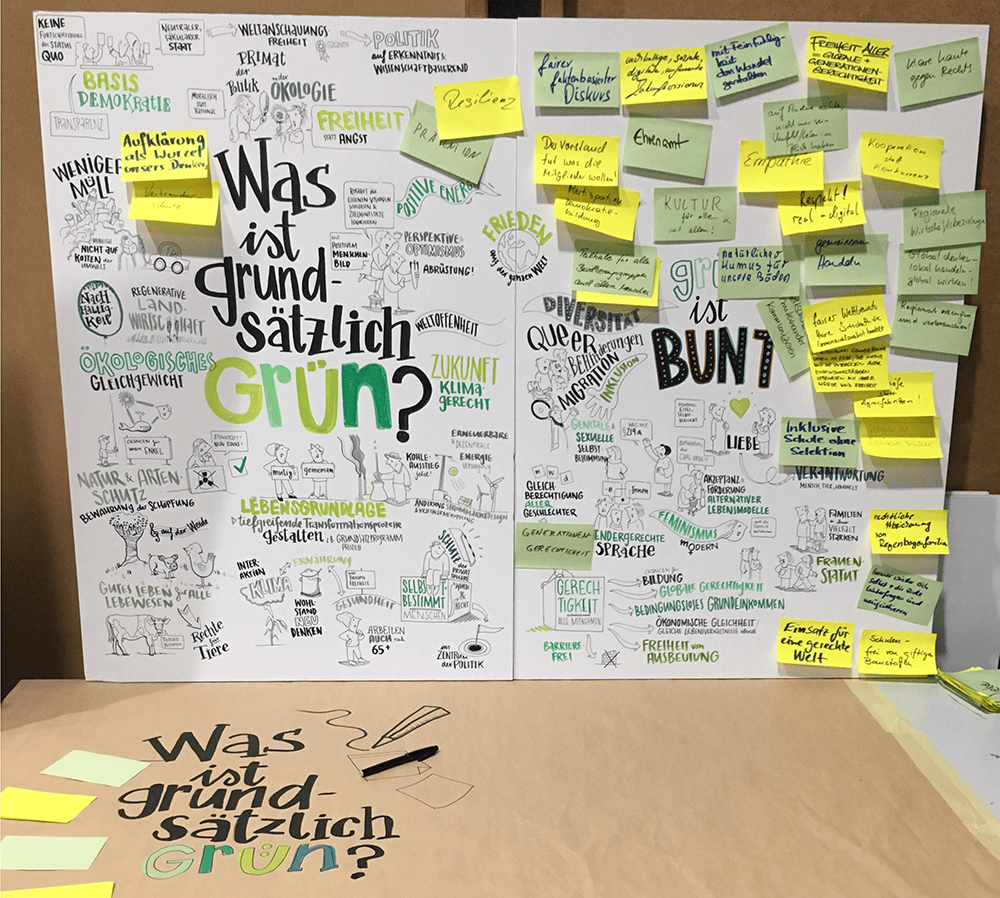
Visual facilitation does not exclude graphic recording – quite the contrary. Like the knowledge wall method, both are tools for supporting and documenting the participants’ learning process throughout the process. Both approaches use the power of visual elements to make information more accessible and understandable.

Interaction Graphic Facilitation Graphic Recording studio animanova

Visual facilitation for image development

Graphic facilitation can also be used for image creation and development, e.g. for a strategy image. Visual metaphors are often used to represent team cohesion or corporate goals. The saying ‘We’re all in the same boat’ does not specify the type of boat. Is it a sailing boat, or does a cruise ship better represent the concept of cooperation? A frigate, a submarine, a fishing boat? Each type evokes different associations. It is important to develop and identify the imagery that best suits the visual language with which employees in the company or department want to identify. A graphic facilitator can assist in this process by asking appropriate questions and sketching ideas on the spot. An outside perspective often helps to find more creative approaches and to think outside the box. A graphic facilitator inspires and helps to find the best expression.

If you would like my experience and support for your visual communication, please write to me.